How to register a short-term rental in Portugal (2026 guide)
The documents, deadlines and requirements to register a short-term rental (alojamento local) in Portugal in 2026, following the changes in Decree-Law 76/2024.
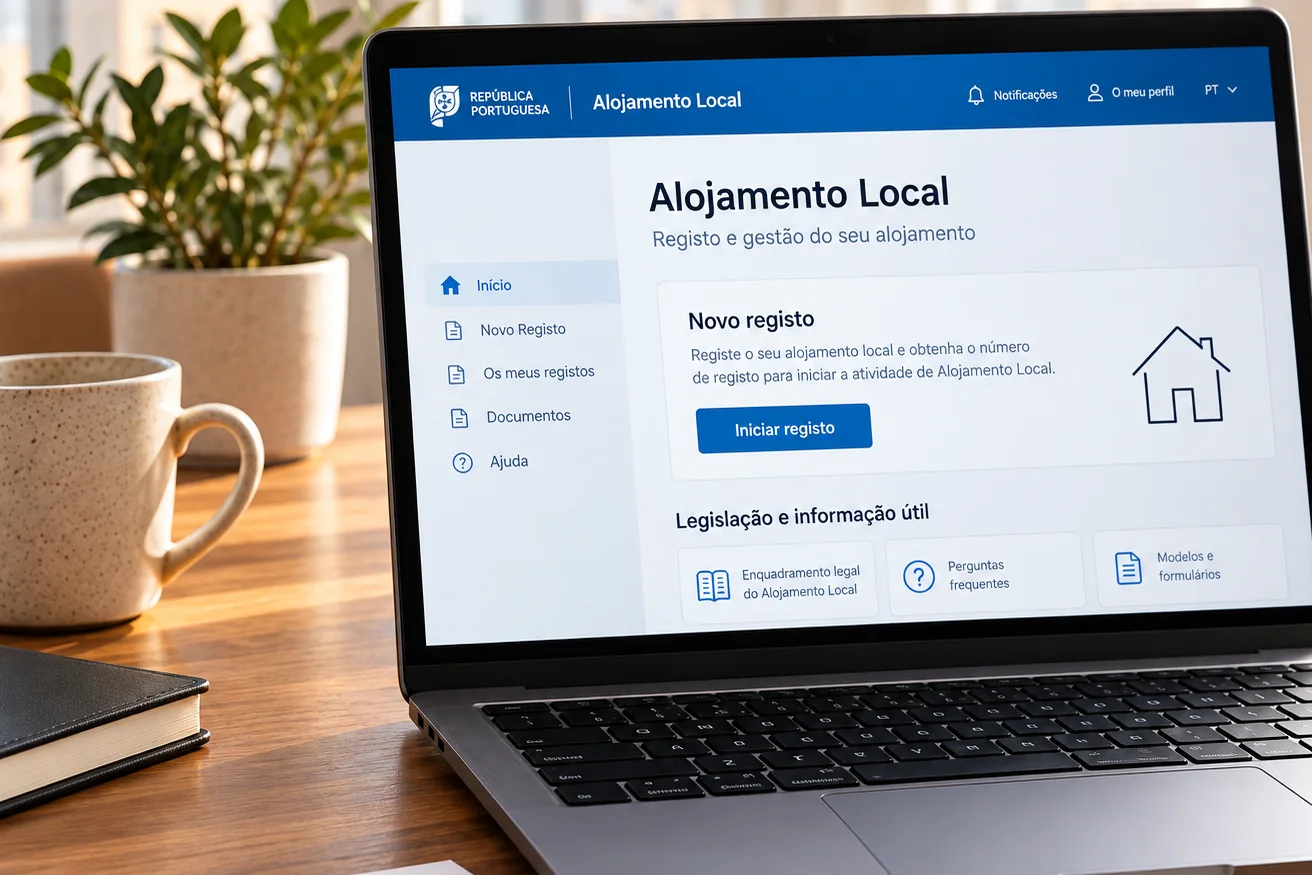
Registering a short-term rental (alojamento local, AL) in Portugal is done online, is free or low-cost in most municipalities, and can be completed within a few weeks when your paperwork is in order. The rules have changed considerably since 2023: the Mais Habitação (government housing programme) tightened the regime, and Decree-Law 76/2024 (Decreto-Lei n.º 76/2024) reopened the door to new registrations, while giving city councils (câmaras municipais) more power to decide where and how short-term rentals can grow. This guide sets out, step by step, what you need to know in 2026.
1. First, check whether your area accepts new registrations
The national suspension of new registrations in apartments, introduced by Mais Habitação in 2023, was revoked by Decree-Law 76/2024, in force since 1 November 2024. Today, the decision lies with the municipalities. Municipalities with more than a thousand short-term rental registrations must approve their own regulations and may establish:
- containment areas (áreas de contenção), where new registrations are banned or subject to special authorisation;
- sustainable growth areas (áreas de crescimento sustentável), where the activity is monitored more closely;
- a temporary suspension of new registrations, by resolution of the municipal assembly (assembleia municipal).
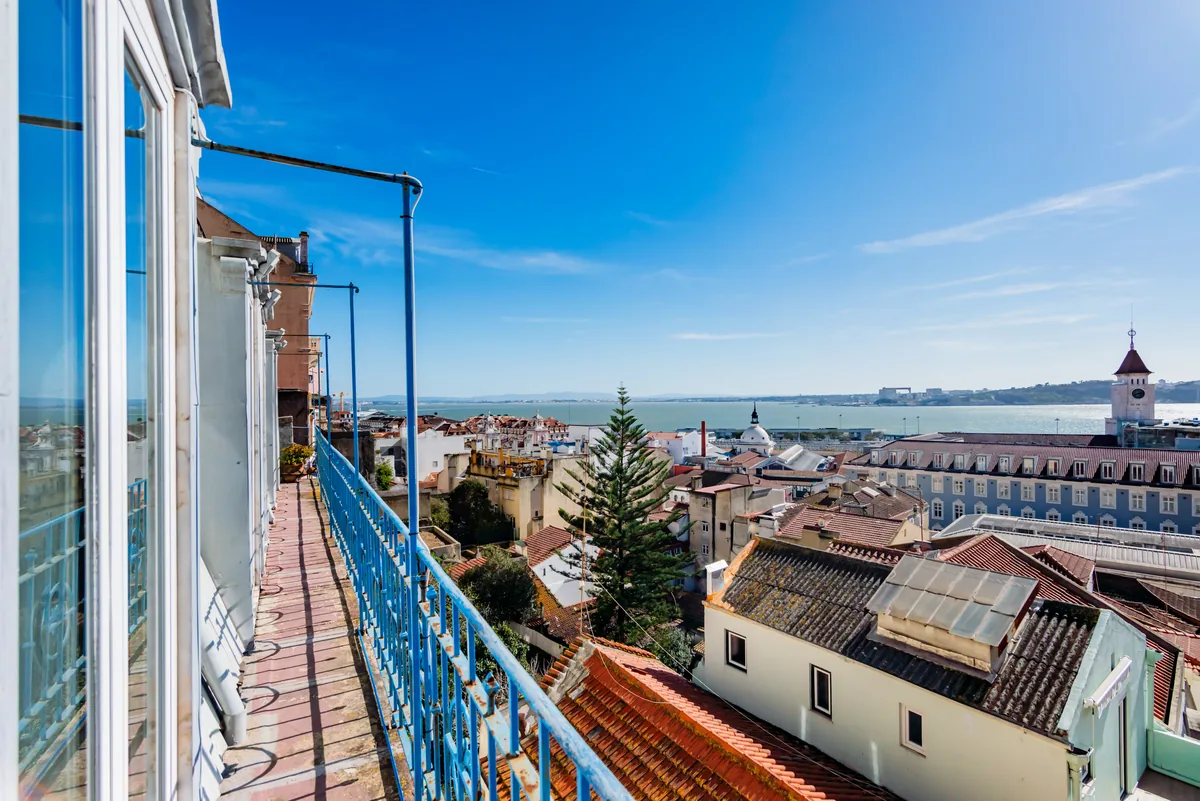
Lisbon, for example, has had municipal regulations in force since December 2025, with parishes (freguesias) under absolute and relative containment. Before investing time (or money) in a registration, check your city council’s regulations or talk to us: we know, area by area, where you can go ahead. See our pages for Lisbon, Porto, Cascais and the Algarve.
2. Choose the right category
The legal regime provides for several categories of short-term rental. The most common for private owners are:
- Moradia (house): a detached, single-family building.
- Apartamento (apartment): a self-contained unit within a building (the most common category in cities).
- Estabelecimento de hospedagem (guesthouse): accommodation units that are rooms; if it has dormitories, it can be a hostel.
- Quartos (rooms): when guests are hosted in the holder’s own residence, with a maximum of three rooms.
Under Decree-Law 76/2024, maximum capacity is now 9 rooms and 27 guests per property (except rooms and hostels), with extra beds allowed.
3. Gather your documents
Registration is made by comunicação prévia com prazo (prior notification with a response period) on the Balcão do Empreendedor (government online business portal, gov.pt). Have the following ready in digital format:
- the holder’s identity document (or the access code to the Certidão Permanente, the online company registry certificate, in the case of a company);
- the property’s caderneta predial urbana (property tax record);
- the autorização de utilização (occupancy permit) or another valid title of use for the property;
- the lease or another title authorising you to operate the property (a contrato de comodato (loan-for-use agreement), a contrato de exploração (operating agreement), etc.), if you are not the owner;
- proof of the declaração de início de atividade (start-of-activity declaration) or change of activity filed with Finanças (the Tax Authority);
- for hostels in buildings under propriedade horizontal (condominium ownership), the minutes of the assembleia de condóminos (owners’ association meeting) authorising the hostel.
For apartments, prior authorisation from the condomínio (building management) is no longer required under Decree-Law 76/2024. It is still good practice, however, to inform the building’s management (see point 6).
4. The registration, step by step
- Register your activity with Finanças. On the Portal das Finanças (the Tax Authority’s online portal), file the start-of-activity declaration (or a change declaration, if you are already self-employed) with the appropriate CAE (activity code) for short-term rentals, usually 55201 (furnished accommodation for tourists) or 55204 (other short-stay accommodation).
- Take out the mandatory insurance. A short-term rental must have valid insurance covering the risks of the activity, including third-party liability. The validity of the insurance is now shown in the national register, and a lack of valid insurance is grounds for the city council to cancel the registration.
- Submit the prior notification. Log in to the Balcão do Empreendedor with the Chave Móvel Digital (digital mobile key), Cartão de Cidadão (citizen card) or a digital certificate, choose “Alojamento local – registo da atividade”, fill in the property details and attach the documents.
- Wait for the objection period. The city council has 60 days to object to the registration, or 90 days if the property is in a containment area. If there is no objection, the registration becomes valid.
- Keep your registration number. The number assigned in the Registo Nacional de Alojamento Local, RNAL (National Short-Term Rental Register), is the only valid title for opening to the public. It must appear in every listing, and platforms such as Airbnb and Booking.com require it before publishing.
- Get the property ready and start advertising. Only publish your listing and accept bookings once you have your registration number.
5. Requirements the property must meet
As well as being in a good state of repair, with water, electricity and windows or balconies opening to the outside, the property must meet safety and guest information requirements. The main ones are:
- an accessible fire extinguisher and fire blanket;
- first-aid equipment;
- a visible notice of the national emergency number (112);
- the Livro de Reclamações (official complaints book), in both physical and electronic format;
- guest information on how the property works, house rules and useful contacts, also in foreign languages;
- cleaning and a change of linen between guests.
Larger properties and hostels have additional requirements. Turismo de Portugal (the national tourism authority) publishes up-to-date technical guides on each of these points.
6. Obligations once you are open
- Reporting foreign guests through SIBA (Sistema de Informação de Boletins de Alojamento, the guest registration system), within the legal deadline after check-in and check-out.
- Taxa turística (tourist tax) in the municipalities that apply it (Lisbon, Porto, Cascais, Sintra, Gaia, Albufeira, Portimão and many others). The amount and exemptions vary from one municipality to another; it is charged to the guest and paid over to the city council.
- Invoicing for every stay and declaring the income for IRS (personal income tax), or IRC (corporate income tax) if you operate through a company.
- Insurance kept valid at all times and the registration updated whenever anything changes (holder, capacity, contact details).
- A good relationship with the building. The owners’ association can object to the activity by a reasoned resolution, approved by more than half of the building’s permilagem (ownership shares), based on repeated, proven acts that disturb the normal use of the building or residents’ rest. The final decision lies with the city council.
Common mistakes that delay (or block) registration
- Going ahead without checking the municipal regulations and discovering the parish is under containment.
- An occupancy permit that does not match the property’s residential use.
- Publishing listings before you have your registration number.
- Letting the insurance lapse, which can now lead to the registration being cancelled.
- Forgetting to report guests on SIBA or to collect the tourist tax, both of which lead to fines.
Frequently asked questions
How much does it cost to register a short-term rental?
The prior notification on the Balcão do Empreendedor is, as a rule, free; some municipalities charge their own fee. The real costs lie in the preparation: insurance, safety equipment, furniture, photography and setting up services.
How long does it take?
The city council has 60 days to object (90 days in containment areas). With complete documentation, the process is usually finished within that period.
Do I need the building’s authorisation for an apartment?
Since November 2024, no. Only hostels in buildings under condominium ownership need minutes from the owners’ association meeting. The owners’ association can, however, object later under the conditions described above.
Can I register a short-term rental if I live outside Portugal?
Yes. You need a Portuguese NIF (tax number) and a means of digital authentication, and it is essential to have a local team to deal with guests, the city council and the authorities. It is one of the services most requested from BnBird by non-resident owners.
How BnBird helps
At BnBird we handle the entire process: checking the area, registration on the Balcão do Empreendedor, mandatory insurance, safety kit, setting up electricity, water, TV and internet, and then the day-to-day operation, from guest reporting to the tourist tax. If you are thinking of opening a short-term rental, ask for a free assessment or try our income simulator.
Sources
- Decreto-Lei n.º 76/2024, of 23 October (Diário da República)
- Turismo de Portugal: registering short-term rental properties
- gov.pt: alojamento local, registering the activity
- Regulamento Municipal do Alojamento Local de Lisboa (Lisbon Municipal Short-Term Rental Regulations, Aviso n.º 29926-A/2025/2)
General information, updated September 2026. It does not replace checking your municipality’s regulations or taking legal advice.
This article was originally written in Portuguese and translated with the help of artificial intelligence. It does not replace consulting BnBird. Read the original in Portuguese
We assess your property and prepare a tailored income estimate, with no obligation.
Keep reading

Web Summit, MotoGP and Other Events That Affect Your Autumn Rental Rates
Use the Lisbon Marathon and Web Summit dates to adjust rates, minimum stays and cleaning for your short-term rental (alojamento local) in Lisbon, Cascais…
October 2026 · 8 min read
Short-term rental management costs in Portugal (2026)
Market commissions, what is included, what is charged separately and what to ask before handing your short-term rental in Portugal to a manager.
September 2026 · 8 min read
Short-term rental income in Portugal (2026): estimates by area
Estimate your property's revenue in Lisbon, Porto, Cascais, Sintra, the Algarve and Comporta, the costs to deduct and what pushes rental income up.
September 2026 · 5 min read