Short-term rental income in Portugal (2026): estimates by area
Estimate your property's revenue in Lisbon, Porto, Cascais, Sintra, the Algarve and Comporta, the costs to deduct and what pushes rental income up.
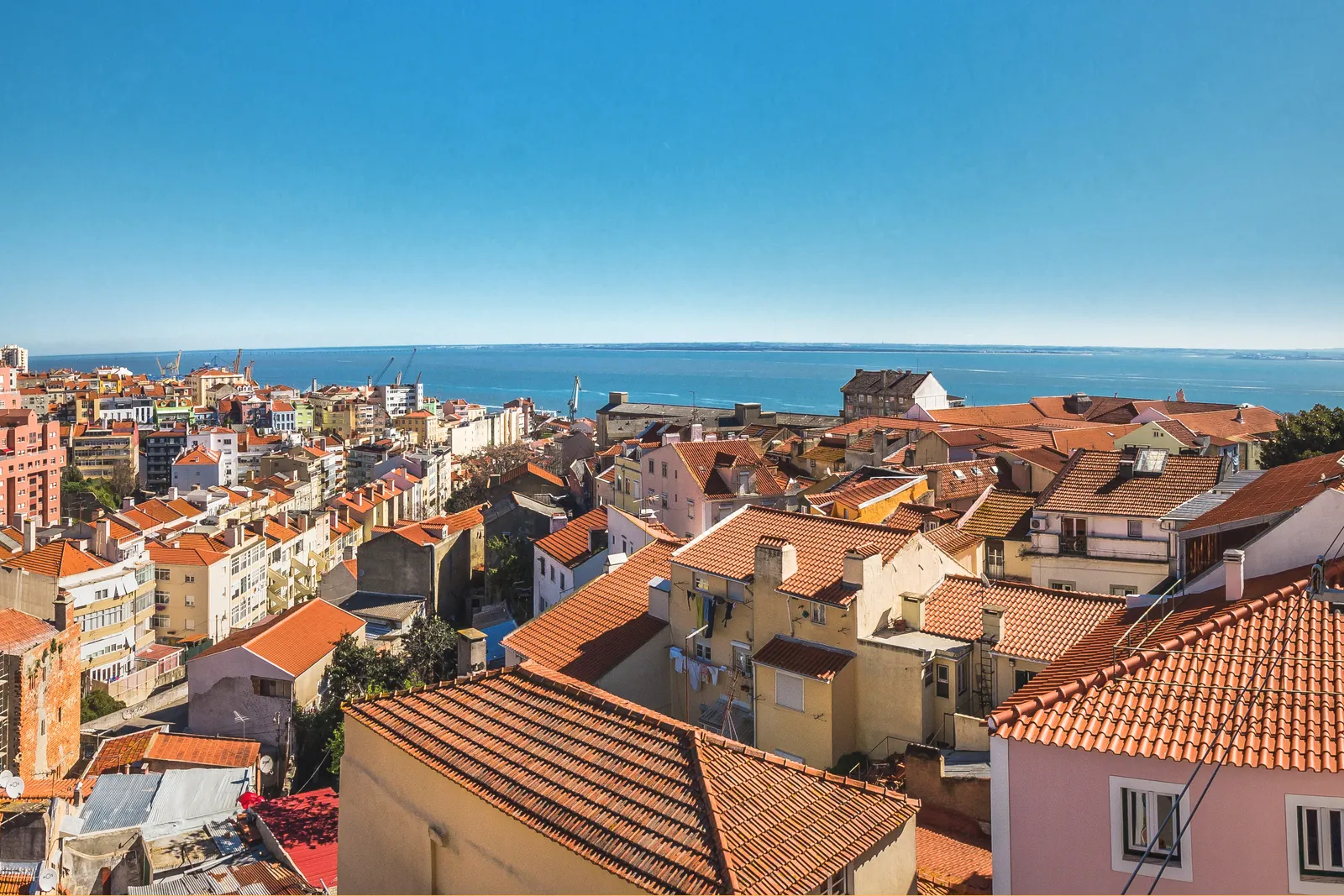
“How much can I earn from my property as a short-term rental (alojamento local, AL)?” is the first question almost every owner who contacts us asks. The answer depends on three factors: the location, the property type and the occupancy. In this article you can simulate your property’s revenue in Portugal’s main tourist hotspots in 2026, and we explain which costs you need to deduct and what pushes your income up (or down).
Simulate your property
Choose the area and property type to see the annual estimate in three scenarios (downside, base and upside). The simulator uses the market’s average nightly rate and occupancy in each area (AirDNA and AirROI market data) and the returns we achieve at the properties we manage (PriceLabs). It shows the gross value of stays: the booking platform commissions (averaging around 15%) and the management commission are then deducted from the amount you receive.
How much your property earns
Choose the city and property type to get the estimated gross annual revenue in three scenarios: low, base and high.
Indicative short-term rental estimate, as gross annual revenue (value of stays), based on market references (PriceLabs, AirDNA, AirROI and Airbtics). Excludes management fees, channel fees and taxes. The final proposal is made after assessing the property.
We analyse your property and prepare a tailored profitability estimate, with no obligation.
How to read the estimates
Average market occupancy includes every kind of listing, from the well managed to the half-forgotten. A property with good photos, dynamic pricing and high ratings usually performs above average: at properties managed by BnBird, average annual occupancy is 80%. On the other hand, highly seasonal areas such as the Algarve and Comporta concentrate much of their revenue between June and September, and the winter months weigh significantly on the overall average.
Seasonality: the same average, very different years
Two areas with the same annual revenue can have opposite profiles. In Lisbon and Porto, demand holds up throughout the year, with city tourism, events and business stays, and the quiet months (January, February, November) are rarely empty. In Cascais and Sintra, summer carries more weight, but proximity to Lisbon ensures demand at weekends and on public holidays.
In the Algarve and Comporta, the high season accounts for most of the revenue. A villa in Comporta can command very high nightly rates in July and August and have few bookings in winter, which explains the lower average occupancy. In these areas, the pricing strategy for the shoulder season (May, June, September and October) and longer winter stays make a big difference to the year’s result.

Gross revenue is not profitability
To compare a short-term rental with other investments, look at the yield on the property’s value: divide the net annual income (after costs and before tax) by the property’s purchase price or market value. A T2 (two-bedroom) in Cascais may generate more revenue than a T2 in Porto, but if it cost much more, the yield may be similar or even lower.
The costs you need to deduct
To get from gross revenue to what you actually keep, deduct:
- Booking platform commissions: on average around 15% across the various channels (less on direct bookings). They are always deducted from the amount you receive.
- Management, if you hand the property to a company: typically between 15% and 25% of revenue, plus IVA (VAT). See how much short-term rental management costs.
- Cleaning and laundry, largely covered by the cleaning fee paid by the guest.
- Consumables and minor repairs.
- Fixed costs: condomínio (building service charges), electricity, water, gas, internet and TV, mandatory insurance and IMI (municipal property tax).
- Income tax (IRS, personal income tax, or IRC, corporate income tax), which depends on your tax situation. Always speak to your accountant.
An example, for a T2 in Lisbon in the simulator’s base scenario: around €39,100 in stays per year; platform commissions (averaging 15%) add up to around €5,900; full management at 20% of the gross value of stays adds up to around €7,800 (plus VAT). That leaves around €25,400 before fixed costs and tax, and this is where management performance makes the difference: every extra point of occupancy and every extra euro on the nightly rate counts towards the final figure.
What pushes income up
- Dynamic pricing. Adjusting rates daily according to demand, events and how far ahead the booking is made is often worth more than any other improvement.
- Presence on multiple channels. Being on Airbnb alone excludes a large share of guests. We publish on more than 50 channels and get more and more direct bookings.
- Professional photography and a good listing. It is what guests see first and what decides the first click.
- High ratings. Spotless cleaning, simple check-in and fast replies raise your ratings and, in turn, your occupancy.
- Mid-term stays in the low season. Combining summer tourism with digital nomads in winter can reduce empty dates. To find out more, read: Short, mid or long-term rental: which earns more.
Frequently asked questions
Which is the most profitable area for short-term rentals?
In revenue per T2, Cascais, Vilamoura, Albufeira, Lisbon and Sintra are at the top. But real profitability also depends on the property’s purchase price and on seasonality: Lisbon and Porto have steadier demand throughout the year.
Does a T1 or a T2 earn more?
A T2 generates more revenue per night, but a T1 (one-bedroom) usually has lower costs and slightly higher occupancy. In terms of yield on the property’s value, the difference is often small.
Are these figures guaranteed?
No. They are market estimates. For a forecast tailored to your property, with three scenarios (downside, base and upside), use the simulator or ask for a free assessment.
Sources
- AirDNA market data (occupancy and average nightly rate by area) and AirROI (Comporta), used in the BnBird simulator.
- BnBird operating data: average annual occupancy and average guest rating at managed properties.
Indicative estimates, as of October 2026. They do not constitute a guarantee of income or financial or tax advice.
This article was originally written in Portuguese and translated with the help of artificial intelligence. It does not replace consulting BnBird. Read the original in Portuguese
We assess your property and prepare a tailored income estimate, with no obligation.
Keep reading

Web Summit, MotoGP and Other Events That Affect Your Autumn Rental Rates
Use the Lisbon Marathon and Web Summit dates to adjust rates, minimum stays and cleaning for your short-term rental (alojamento local) in Lisbon, Cascais…
October 2026 · 8 min read
How to register a short-term rental in Portugal (2026 guide)
The documents, deadlines and requirements to register a short-term rental (alojamento local) in Portugal in 2026, following the changes in Decree-Law 76/2024.
September 2026 · 8 min read
Short-term rental management costs in Portugal (2026)
Market commissions, what is included, what is charged separately and what to ask before handing your short-term rental in Portugal to a manager.
September 2026 · 8 min read